
Original Title: السما بتشوف
English Title: WHAT IF THE SKY SEES US?
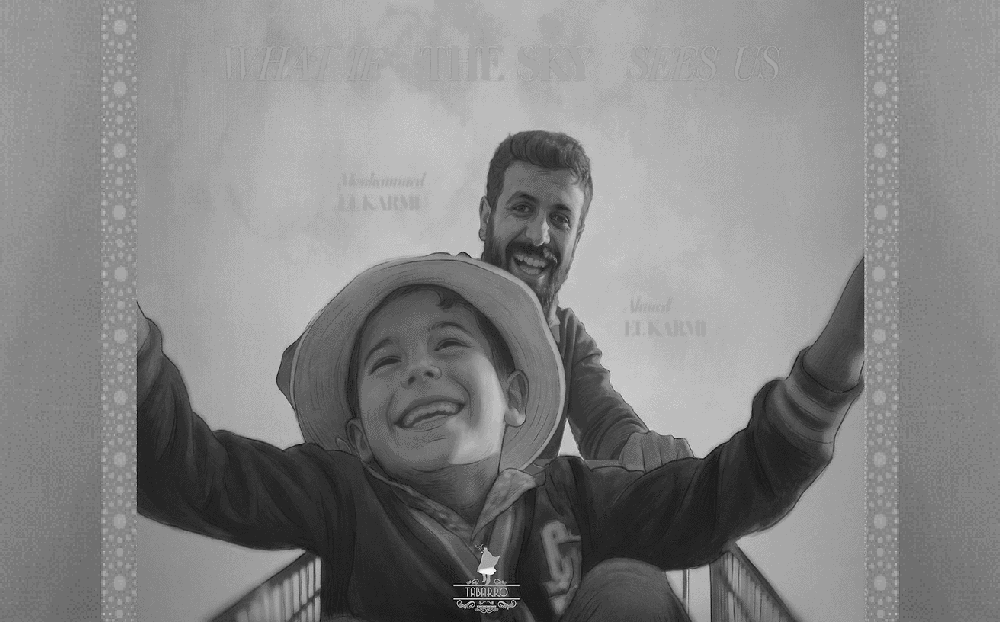
Synopsis: An eight-year-old boy does a heist on the mosque to save his father’s job.
Short Film, Fiction 7’22
Lebanon – Romania 2026
Cast:
Amhad El Karmi, Mohammed El Karmi
Crew:
Director: Christine Abou Zein
Producers: Christine Abou zein, Mariuca Badea (Tabarro)
Writer: Christine Abou Zein
Editor: Karim Nasr
Cinematography: Alex Meouchy
Asst. Director: Krystel Sawaya
Lighting: Jean Pierre Isac
Camera Operator: Liza Nasser
Art Direction: Daniel Choueiry
Sound: Karim Nasr Pamela Al Alam
Production: Alba Univeristy Beirut – Lebanon / Tabarro – Romania.
Director Biography: Christine Abou Zein
Born in 2003, Christine Abou Zein is a Lebanese junior writer, director, and photographer based in Beirut. Her work explores human nature and existence through intimate, reflective moments, with a strong emphasis on atmosphere, inviting contemplation and introspection.
Christine graduated with a BA in Film Directing from ALBA (Académie Libanaise des Beaux-Arts) in 2024. Her graduation short film “Remains” received wide critical appreciation, screening at multiple international festivals. The film premiered nationally and earned the Special Jury Mention for Best Cinematography at the Beirut Shorts International Film Festival. Internationally, “Remains” was awarded Best Short Film and Best Cinematography at the Festival du Film Libanais in France.
In addition to her directing work, Christine has participated in several writing workshops as a trainee and currently serves as a selection committee member for LIM writing workshops, in collaboration with Le Groupe Ouest. In 2025, she also served as a jury member at the ShorTS International Film Festival in Trieste.
Director Statement:
This film was born from a deeply personal feeling: guilt. As children, before we understand religion or philosophy, we perceive our parents as our first gods: all-powerful, morally absolute, and the creators of our world. The values they teach us shape our conscience, and no matter how far we grow, we cannot escape them.
The story explores a child who begins to recognize his father’s sacrifice and, unable to comprehend larger social or economic forces, blames himself for the hardship he sees. In trying to ease that guilt, he acts against the very morals his father instilled in him, only to discover that there is no simple escape, neither from ethics nor from hardship itself.
Set within a modest social environment, the film reflects a broader cultural reality where children internalize responsibility for struggles beyond their control. Visually blending realism with poetic imagery, and told strictly from the child’s perspective, the film invites the audience to inhabit his emotional and moral world. At its heart, this is a story about love, sacrifice, and the quiet, enduring weight of guilt that shapes us.